Post tattoo removal aftercare determines how smoothly your skin heals and how effectively your treatment series progresses toward a clear canvas. The days following each laser tattoo removal session are when the real work happens beneath the surface. Treating your skin with the right care during this window protects your results and keeps your healing journey on track.
Key Takeaways
-
Sessions are typically spaced 6 to 8 weeks apart. Surface healing usually takes about 1 to 2 weeks, but your body needs the full interval to clear fragmented ink particles before the next treatment.
-
Keeping the area clean and moisturized is the foundation of recovery. Gentle cleansing twice daily paired with a fragrance-free ointment helps the skin barrier rebuild without irritation.
-
Blistering and scabbing are common, not signs of a problem. These are natural responses to the laser’s effect on ink pigment and typically resolve within 1 to 2 weeks.
-
Sun exposure and picking are the two biggest threats to healing. Both can cause scarring, pigment changes, and interfere with how well your skin clears the treated ink.
-
Showering is generally fine within 24 hours, with care taken around the site. Keeping water pressure gentle and avoiding soaking helps protect the treated skin.
If you are preparing for a laser tattoo removal session or want a personalized recovery plan, schedule a consultation with our team. We will walk you through exactly what your skin needs at every stage.
What to Expect After Laser Tattoo Removal
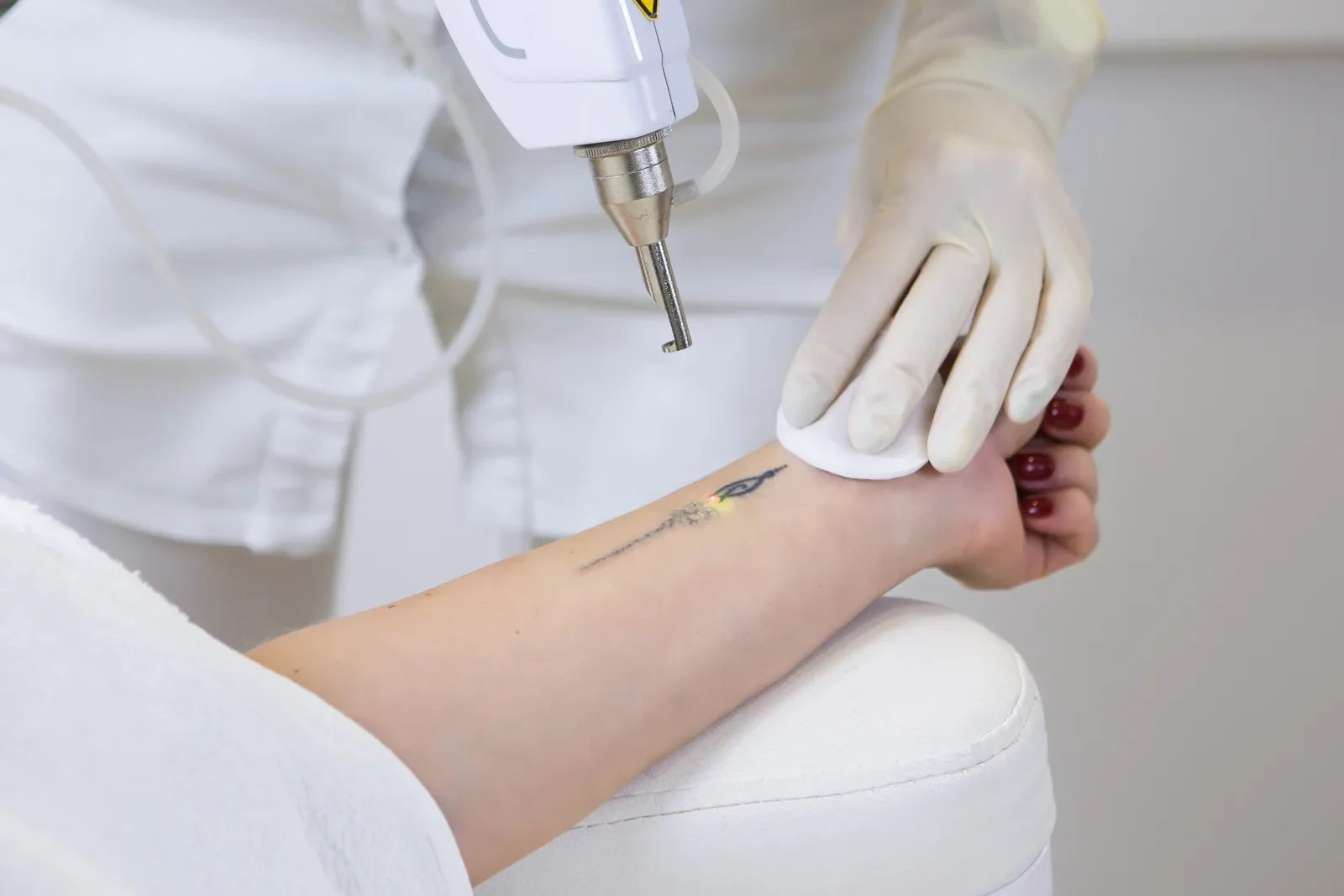
Immediately after your session, the treated area will likely look red, raised, and slightly swollen, similar to a fresh sunburn. This is a normal reaction as your body begins to respond to the laser’s effect on the ink particles beneath your skin. Some clients notice a frosting effect, a brief whitening of the skin that fades within 20 to 30 minutes.
Over the next several days, the area may feel tender to the touch and appear darker before it begins to lighten. Mild itching is common as the skin repairs itself. Every treatment cycle looks a little different depending on ink density and your skin’s natural healing pace, but this general pattern holds true across most sessions. If you are curious about what the full process looks like from start to finish, our guide on how laser tattoo removal works offers helpful context.
Cleaning and Protecting the Treated Area
Gentle, consistent cleansing is the cornerstone of post tattoo removal aftercare. Wash the treated area twice daily with a mild, fragrance-free cleanser and lukewarm water, patting it dry with a clean towel rather than rubbing. Avoid scrubbing or using exfoliating products anywhere near the site.
After cleansing, apply a thin layer of a fragrance-free healing ointment to keep the skin hydrated and support its natural barrier function. Cover the area with a non-stick, breathable bandage for the first few days, especially if it will be exposed to clothing or friction. Change the dressing daily or whenever it becomes damp or soiled. This simple rhythm of cleanse, moisturize, and protect gives your skin the best environment to recover between sessions.
Managing Redness, Swelling, and Scabbing
Redness and swelling typically peak within the first 48 hours and gradually subside over the following week. A cold compress applied for 10 to 15 minutes at a time can ease discomfort and reduce inflammation during this early stage. Elevating the treated area, when possible, also helps minimize swelling.
Scabbing and small blisters often appear within a few days as the skin works to shed damaged pigment. These should be left completely alone and allowed to fall off naturally, usually within 1 to 2 weeks. Picking or scratching at scabs disrupts the healing process and raises the risk of scarring or uneven pigmentation. If you notice unusual swelling, persistent pain, or signs of infection such as warmth, oozing, or fever, reach out to your provider.
What to Avoid During the Healing Process
Sun exposure is one of the most important things to avoid after laser tattoo removal. Direct sunlight on healing skin can cause hyperpigmentation and interfere with how evenly the area fades, so keep the area covered or shaded until it is fully healed. Once healed, a broad-spectrum sunscreen becomes essential for protecting the skin long term.
Also avoid soaking the area in pools, hot tubs, or baths, as submerged water increases infection risk while skin is compromised. Skip tight clothing that rubs against the treated area, and steer clear of alcohol-based products, retinoids, or harsh skincare actives nearby. Picking at scabs or blisters, no matter how tempting, should always be avoided to protect your final results.
Tips for Faster Healing and Better Results
Staying well hydrated and eating a nutrient-rich diet give your skin and immune system the resources they need to heal efficiently between sessions.
Wearing loose, breathable fabrics over the treated area reduces friction and allows air circulation, which supports recovery. Keeping up with your scheduled follow-up appointments also matters, since consistent spacing between sessions allows your skin to fully clear ink before the next round of treatment. For a realistic sense of how many appointments your tattoo may require, see our breakdown of how many sessions of laser tattoo removal you need. Our guide to laser tattoo removal cost also breaks down what influences pricing.
Schedule Your Laser Tattoo Removal Consultation
Ready to start or continue your tattoo removal journey with a team that prioritizes your skin’s health at every step? Schedule a consultation with The Aesthetic Edit in Cedar Park, Texas, and we will build an aftercare plan tailored to your skin and your goals.
Frequently Asked Questions About Tattoo Removal Aftercare
How do I care for my skin after tattoo removal?
Keep the area clean, moisturized, and protected from sun and friction. Wash gently twice daily, apply a fragrance-free healing ointment, and cover the site with a breathable bandage until it is fully healed.
Is scabbing or blistering normal after treatment?
Yes, scabbing and small blisters are a normal part of the healing process as your skin sheds treated pigment. They typically resolve on their own within 1 to 2 weeks and should never be picked or popped.
Can I work out or sweat after tattoo removal?
It is best to avoid strenuous exercise and heavy sweating for several days after treatment. Sweat and friction can irritate the healing skin and increase the risk of infection, so give the area time to settle before resuming intense workouts.
When can I shower after laser tattoo removal?
Most clients can shower within 24 hours, using lukewarm water and gentle pressure directly on the treated area. Avoid soaking in baths, pools, or hot tubs until the skin has fully healed.
How long does it take for the skin to fully heal?
The skin’s surface usually heals within 1 to 2 weeks, while the body continues clearing ink for several more weeks. That is why sessions are typically spaced 6 to 8 weeks apart, with full clearance taking multiple sessions over several months.