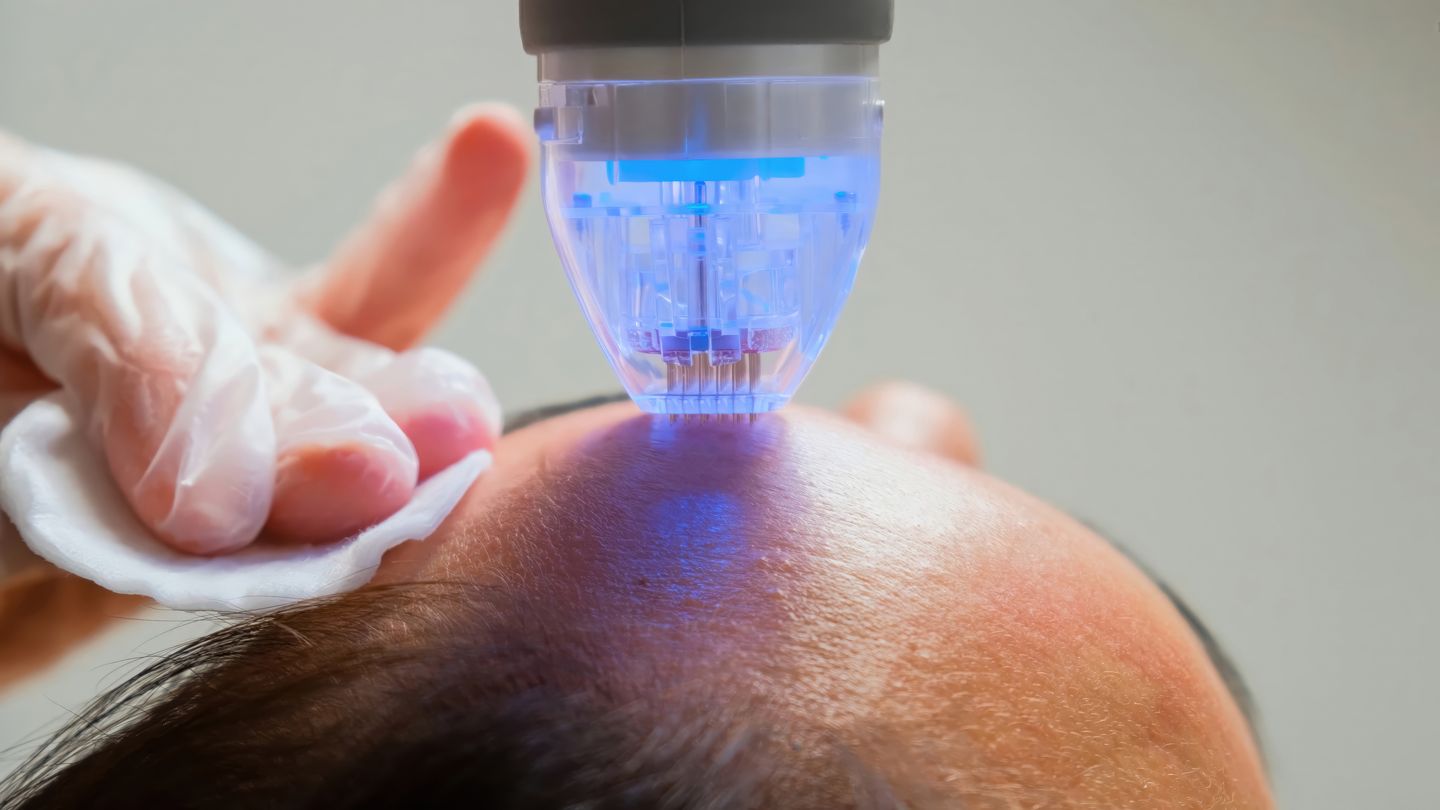
You’ve done your research, and now you’re stuck between two treatments that both promise smoother, more refined skin. Traditional microneedling and RF microneedling sound similar, and the difference isn’t always clear. This complete guide breaks down exactly how each treatment works, who benefits most from each, and how to decide which one is right for you.
At The Aesthetic Edit in Cedar Park, TX, our team works with patients every day who are weighing these two options. Whether you’re targeting fine lines, texture, or skin laxity, understanding the distinction between RF microneedling and microneedling is the first step toward results you’ll love.
If you’d rather talk through your options with a provider directly, schedule a consultation. We’re happy to guide you toward the right treatment for your goals.
What Is Traditional Microneedling?
Traditional microneedling uses a device fitted with fine needles to create controlled micro-injuries across the skin’s surface. These tiny punctures trigger your body’s natural wound-healing response, stimulating collagen and elastin production over time.
The results include smoother texture, reduced appearance of fine lines, and improved tone. Many patients also see improvements in acne scars and enlarged pores. It’s a well-established treatment with a strong safety profile across a wide range of skin tones and types.
Most microneedling sessions take 30 to 60 minutes, and downtime is typically minimal. You can expect redness and mild sensitivity for 1-3 days. A series of 3-6 sessions is commonly recommended for optimal results.
What Is RF Microneedling?
RF microneedling combines the collagen-stimulating power of traditional microneedling with radiofrequency (RF) energy delivered directly into the deeper layers of the skin. Morpheus8 is one of the most recognized RF microneedling platforms available today. The treatment works by using needles that penetrate the skin and emit heat energy at precise depths, amplifying the remodeling response significantly.
This dual-action approach targets not just surface texture but also the structural layers responsible for firmness and lift. It’s particularly effective for skin laxity, deeper wrinkles, and concerns that require more substantial tissue remodeling.
Because RF energy is delivered at adjustable depths, the treatment can address concerns that traditional microneedling simply cannot reach as effectively. Downtime is slightly longer, typically 3-5 days, but the results tend to be more dramatic and longer-lasting.
RF Microneedling vs. Microneedling – Side-by-Side Comparison
| Factor | Traditional Microneedling | RF Microneedling |
|---|---|---|
| How it works | Micro-injuries stimulate collagen | Micro-injuries plus RF heat energy at variable depths |
| Best for | Texture, fine lines, mild scarring | Skin laxity, deeper wrinkles, firming |
| Downtime | 1-3 days | 3-5 days |
| Results timeline | 4-6 weeks per session | 4-8 weeks, builds over months |
| How long results last | 6-12 months | 12-18 months or longer |
| Average cost | Lower per session | Higher per session |
| Number of sessions | 3-6 sessions | 1-3 sessions |
| Suitable skin tones | Most skin tones | Most skin tones |
Both treatments are well-tolerated and can be customized to your skin’s needs. The right choice depends on the depth of your concerns and the kind of results you’re hoping to achieve.
Which Treatment Is Right for You?
Here is where the decision becomes personal. Both treatments deliver real results, but they’re optimized for different concerns and different stages of skin aging.
Consider traditional microneedling if:
- Your primary concern is skin texture, tone, or mild acne scarring
- You have fine lines, but not significant skin laxity
- You prefer a shorter recovery window
- You are newer to skin treatments and want to start with a foundational approach
- Budget is a consideration, and you’re comfortable with a multi-session plan
Consider RF microneedling if:
- You’re noticing skin looseness or sagging, particularly along the jawline or under the eyes
- You want to address deeper wrinkles or more significant volume loss in the skin’s structure
- You want longer-lasting results with fewer total sessions
- You’re interested in treatments like Morpheus8 that combine skin resurfacing with deeper remodeling
- You’ve already tried traditional microneedling and want to progress to a more intensive option
The honest answer is that neither treatment is universally better. Individual anatomy, skin conditions, and personal goals all factor into which option will serve you best. A consultation with an experienced provider is the most reliable way to get a recommendation tailored to your skin.
Additionally, you may want to explore how Opus Plasma compares to microneedling if you’re considering plasma-based resurfacing as another alternative.
Ready to Find Your Best Treatment Match?
At The Aesthetic Edit in Cedar Park, TX, we offer both traditional and RF microneedling options, and our approach is always to recommend what’s right for your skin, not just what’s most popular. Our team takes time to understand your concerns, your goals, and your lifestyle before suggesting a treatment path.
Schedule your consultation and let us help you decide which treatment will deliver the results you’re looking for.
Frequently Asked Questions About RF Microneedling vs. Microneedling
What is the main difference between RF microneedling and traditional microneedling?
The main difference is the addition of radiofrequency energy. Traditional microneedling creates micro-injuries to stimulate collagen, while RF microneedling delivers heat energy at depth to amplify skin remodeling and improve laxity.
Which is more effective, RF microneedling or traditional microneedling?
RF microneedling is generally more effective for skin tightening and deeper structural concerns. Traditional microneedling can be equally effective for surface-level texture, tone, and mild scarring, making “more effective” dependent on what you’re treating.
Is RF microneedling better for loose skin?
Yes, RF microneedling is typically the better choice for skin laxity. The radiofrequency energy targets the deeper structural layers of the skin where tightening and firming occur, which standard microneedling alone cannot achieve as effectively.
Which costs more, RF microneedling or traditional microneedling?
RF microneedling typically costs more per session due to the advanced technology involved. However, because it often requires fewer total sessions, the overall investment can be comparable over the course of a full treatment plan.
Can I combine RF microneedling and traditional microneedling?
Combining them in the same session is not typical, but your provider may recommend starting with one and progressing to the other as part of a longer-term skin strategy. A consultation will help clarify the best sequence for your goals.
How do I choose between RF microneedling and traditional microneedling?
Start by identifying your primary concern. If it’s texture, tone, or mild scarring, traditional microneedling is a strong starting point. If you’re dealing with laxity, deeper lines, or want more dramatic and lasting results, RF microneedling is likely the better fit. You can also explore what Morpheus8 can do for your skin to understand the full scope of RF microneedling outcomes.